TLP: AMBER — Share only with members of your organization and trusted partners. Do not publish publicly.
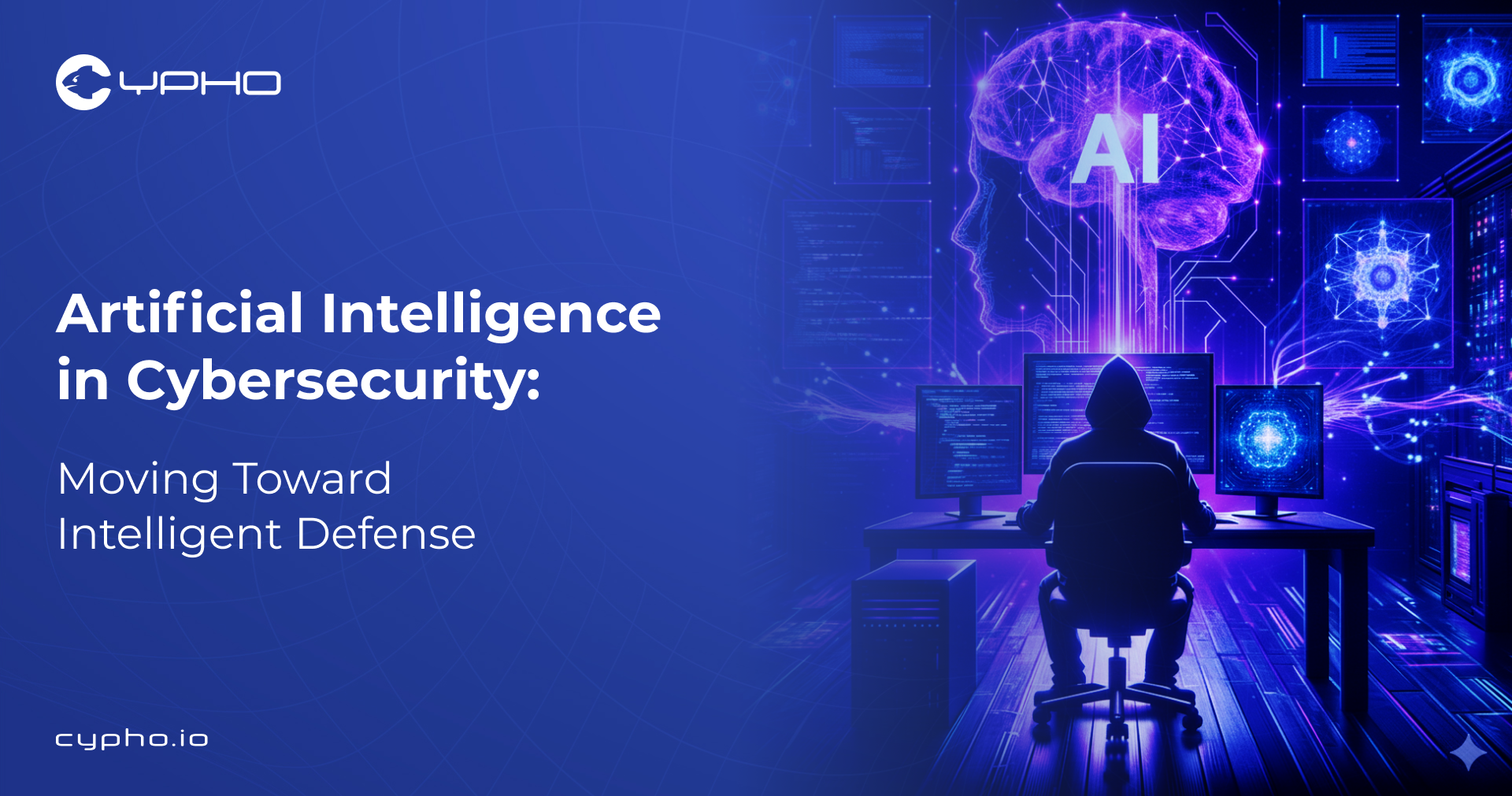
The rapid advancement of digital technologies has positioned cybersecurity as a strategic priority for modern organizations. The widespread adoption of cloud computing, IoT devices, and remote work models has significantly expanded the attack surface. As a result, traditional security approaches increasingly struggle to protect complex and highly dynamic environments. At this stage, artificial intelligence (AI) becomes a core component of modern cybersecurity strategies.
Conventional security systems primarily rely on rule-based and signature-based detection techniques. While effective against known threats, these methods are often insufficient for detecting zero-day vulnerabilities, Advanced Persistent Threats (APTs), and sophisticated insider threats. AI-driven solutions address this gap by leveraging machine learning, behavioral analytics, and pattern recognition to establish a baseline of normal system behavior and identify deviations as potential risks.
One of AI’s greatest strengths lies in its ability to process massive volumes of data at scale. In modern Security Operations Centers (SOCs), millions of logs, endpoint telemetry records, and network events are generated every second. Manual analysis of this data is not feasible. AI enables continuous, real-time analysis and significantly enhances detection and response capabilities.
In practice, AI enables several key technical capabilities in cybersecurity:
• Anomaly detection to identify unusual user or network behavior • Threat intelligence correlation across multiple data sources and IOC feeds • Automated incident response (SOAR) for predefined attack scenarios • Reduction of false positives, allowing analysts to focus on high-impact threats
| Feature | Traditional Security | AI-Based Security |
|---|---|---|
| Detection method | Signatures & rules | Behavioral & pattern analysis |
| Zero-day detection | Limited | More effective |
| Scalability | Low | High |
| False positives | High | Reduced |
| Response speed | Manual / delayed | Automated |
AI is not used solely for defense. Attackers increasingly adopt AI-driven techniques such as AI-generated phishing campaigns, automated exploit discovery, and adaptive malware that modifies its behavior to evade detection. This reality turns cybersecurity into a continuously evolving competition rather than a static defensive problem.
AI-based systems also introduce inherent risks. Issues such as biased training data, model poisoning, and adversarial attacks can undermine the reliability of AI decisions. For this reason, AI should not be deployed as a fully autonomous solution but as a decision-support system operating under strong human oversight and governance.
Looking ahead, the most effective cybersecurity strategies will be built on Human–AI collaboration. AI will handle large-scale data analysis and automation, while human experts will remain responsible for contextual understanding, ethical judgment, and strategic decision-making.