Safeguarding Telecom Networks and Data
Telecom companies manage large amounts of data which puts them at the center for cybercriminals. The rise of 5G expands connectivity, increasing the potential attack surface. To address these, telecom providers must adopt integrated security strategies capable of detecting and mitigating evolving threats, safeguarding customers, partners, and preserving brand integrity.

Cyber threats facing telecommunications companies
To securely operate in high-speed networks, providers must defend against rising threats that target critical infrastructure and disrupt services.

DDoS Attacks
DDoS attacks flood telecom networks with malicious traffic, overwhelming infrastructure and disrupting services for millions. In modern telecom environments, attackers increasingly blend volumetric floods with application-layer and protocol-based exploits, turning simple service outages into multi-pronged security breaches. These attacks aim stealing customer data, installing ransomware, or compromising core network elements. The high-speed, high-capacity nature of telecom infrastructure means even brief downtime can cause severe operational, financial, and reputational damage. Effective mitigation requires continuous patching, real-time vulnerability detection, advanced filtering, scalable capacity to absorb and re-route attack traffic without affecting legitimate users.

Phishing and Impersonation
Telecom staff, partners, and customers are frequent targets of phishing campaigns and impersonation schemes. Attackers use fraudulent messages, cloned websites, and spoofed domains to harvest credentials, install malware, or conduct social engineering attacks—often as a first step in larger intrusions.

Ransomware
Ransomware campaigns can paralyze telecom services by encrypting essential systems, disrupting operations, and demanding high ransom payments. The interconnected nature of telecom infrastructure means that a single infected node can have cascading impacts across the network.

VoIP, SIM Swap, and Mobile Network Fraud Monitoring
Criminals exploit VoIP systems, perform SIM swaps, and abuse mobile network protocols to steal identities, reroute communications, and commit financial fraud. Stopping these threats requires ongoing monitoring, real-time analytics, and rapid incident response.

Advanced Persistent Threats (APTs)
Nation-state and highly organized threat actors target telecom providers to conduct long-term espionage, intercept communications, and gain persistent access to critical infrastructure. These stealthy attacks often bypass traditional defenses, requiring advanced threat detection and continuous monitoring.
Strategic cybersecurity solutions for telecom infrastructure
Empowering telecom providers to proactively defend networks and maintain uninterrupted services.
Early visibility and end-to-end protection
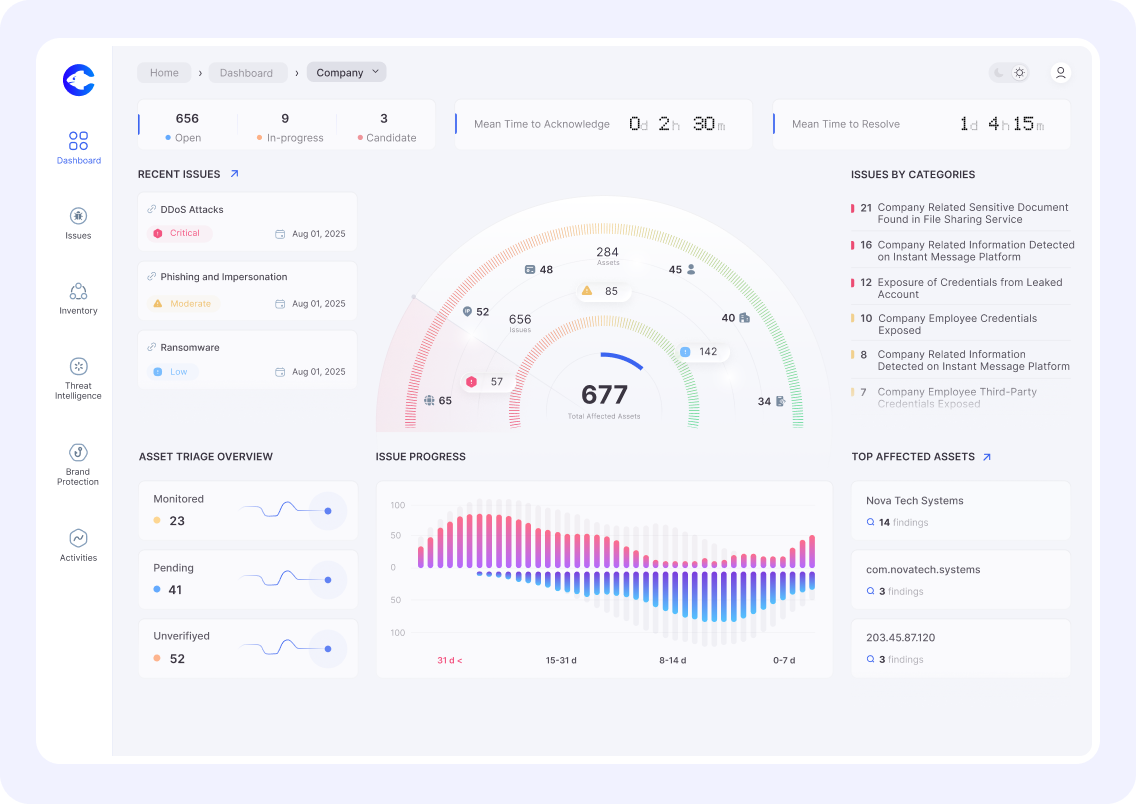
Cypho gives telecom providers a unified view of entire network environment, from core infrastructure to customer-facing services. By detecting threats early in the attack chain, threat analysts can prevent service disruption, protect sensitive data, and ensure uninterrupted connectivity.
Adoption of AI & ML for threat detection and response
Real-time monitoring and reporting